Xander Foster · 7 October 2026
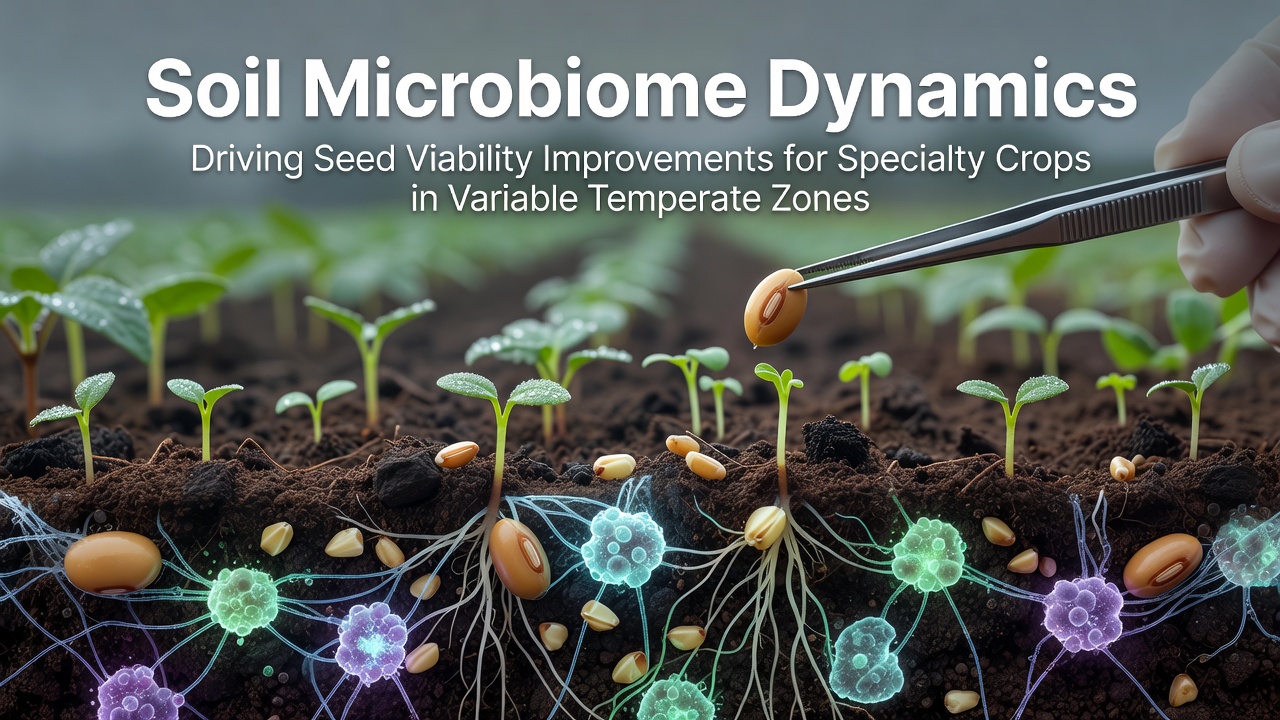
Soil Microbiome Dynamics Driving Seed Viability Improvements for Specialty Crops in Variable Temperate Zones
Soil microbiomes consist of bacteria, fungi, archaea and other microorganisms that interact with plant roots and seeds in temperate zones where temperatures fluctuate between seasons and years; these communities influence nutrient cycling, pathogen suppression and germination rates for specialty crops such as herbs, berries and niche vegetables. Researchers track shifts in microbial populations across variable temperate regions because temperature swings, moisture changes and soil pH variations alter community structure and function in ways that directly affect seed viability outcomes.
Key Microbial Groups and Their Roles
Bacteria from genera like Pseudomonas and Bacillus colonize seed surfaces and produce compounds that enhance water uptake while limiting fungal pathogens, whereas mycorrhizal fungi extend root networks and improve phosphorus acquisition in cooler soils common during spring planting windows. Actinomycetes contribute to organic matter breakdown and release growth-promoting volatiles, and recent sampling campaigns conducted through October 2026 across parts of North America and northern Europe show increased abundance of these groups correlating with higher germination percentages in crops such as lavender and specialty lettuces.
Arbuscular mycorrhizal fungi establish symbiotic associations that stabilize soil aggregates, which in turn protects seeds from desiccation during dry spells that often follow heavy autumn rains in variable temperate zones. Data from field trials indicate that fields with diverse fungal networks maintain seed viability rates above 85 percent even when seasonal temperature deviations reach plus or minus four degrees Celsius compared to historical averages.
Environmental Variability and Microbial Responses
Temperate zones experience irregular freeze-thaw cycles, altered precipitation timing and shifting day lengths that reshape microbial metabolism; for instance, warmer winters can favor fast-growing bacterial taxa that compete with slower symbiotic species, yet studies reveal that certain consortia adapt by shifting metabolic pathways to continue supporting seed coat integrity and embryo development. Soil moisture retention improves when microbial exudates form biofilms around seeds, reducing oxygen stress during waterlogged periods that occur more frequently in regions with changing storm patterns.
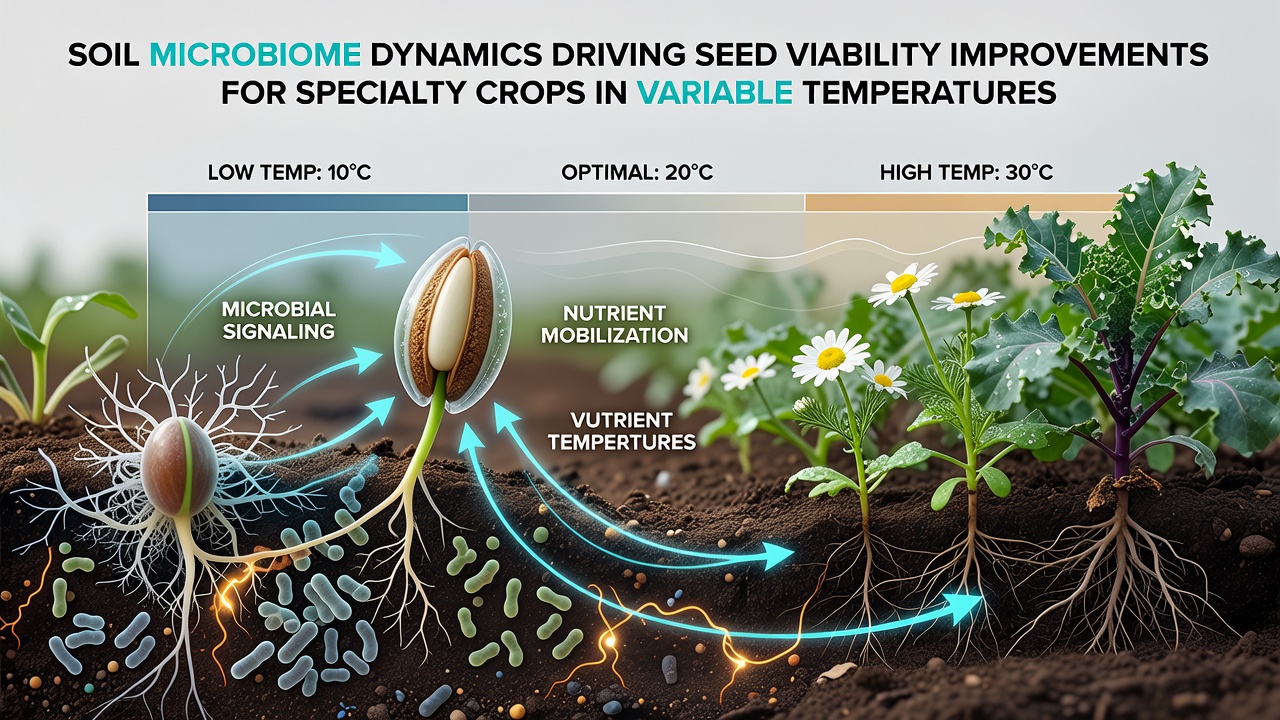
One long-term monitoring project coordinated by Canadian agricultural research stations documented how microbial diversity indices rose following the incorporation of cover crop residues, leading to measurable gains in seed storage life for crops like heirloom tomatoes and culinary herbs stored over winter months. Similar patterns appear in Australian temperate zones where researchers at CSIRO noted enhanced viability in eucalyptus-associated specialty seed lines after targeted microbial inoculations that buffered against drought-induced oxidative damage.
Management Approaches and Observed Outcomes
Farmers apply compost teas, microbial inoculants and reduced-tillage practices to steer community composition toward beneficial profiles, and records from European Union-funded projects show these interventions lifted seed viability metrics by 12 to 18 percent across multiple specialty crop species when implemented consistently over three growing seasons. Crop rotation sequences that include nitrogen-fixing legumes foster rhizobial populations which indirectly support neighboring seed lots by improving overall soil nitrogen availability during critical germination windows.
Precision monitoring tools such as DNA metabarcoding and real-time sensor arrays now allow growers to detect early declines in key microbial indicators before seed lots suffer reduced emergence rates. Integration of these data streams with weather forecasts helps producers adjust planting dates or irrigation schedules in response to predicted microbial stress events, particularly in zones where autumn conditions in 2026 exhibited greater variability than prior decades.
Research Developments Through Late 2026
Collaborations between university laboratories and regional extension services continue to map functional gene clusters within microbiomes that correlate with seed longevity traits; preliminary results presented at October 2026 workshops highlighted specific biosynthetic pathways in Streptomyces species linked to antifungal compound production that preserved viability in stored ginseng and saffron corms. Parallel work in New Zealand temperate sites examines how biochar amendments alter pore-space microbial habitats, yielding consistent improvements in emergence uniformity for high-value berry seedlings exposed to fluctuating spring temperatures.
Seed treatment protocols that combine selected microbial strains with protective coatings demonstrate synergistic effects on germination speed and seedling vigor across replicated trials, with viability retention extending storage windows by several weeks under controlled humidity conditions typical of commercial operations.
Conclusion
Soil microbiome dynamics in variable temperate zones shape seed viability for specialty crops through interconnected mechanisms of nutrient provision, stress mitigation and pathogen control, and ongoing field observations confirm that targeted management sustains these benefits even as climatic patterns continue to shift. Continued integration of molecular monitoring with agronomic practices supports reliable crop establishment across diverse production settings.